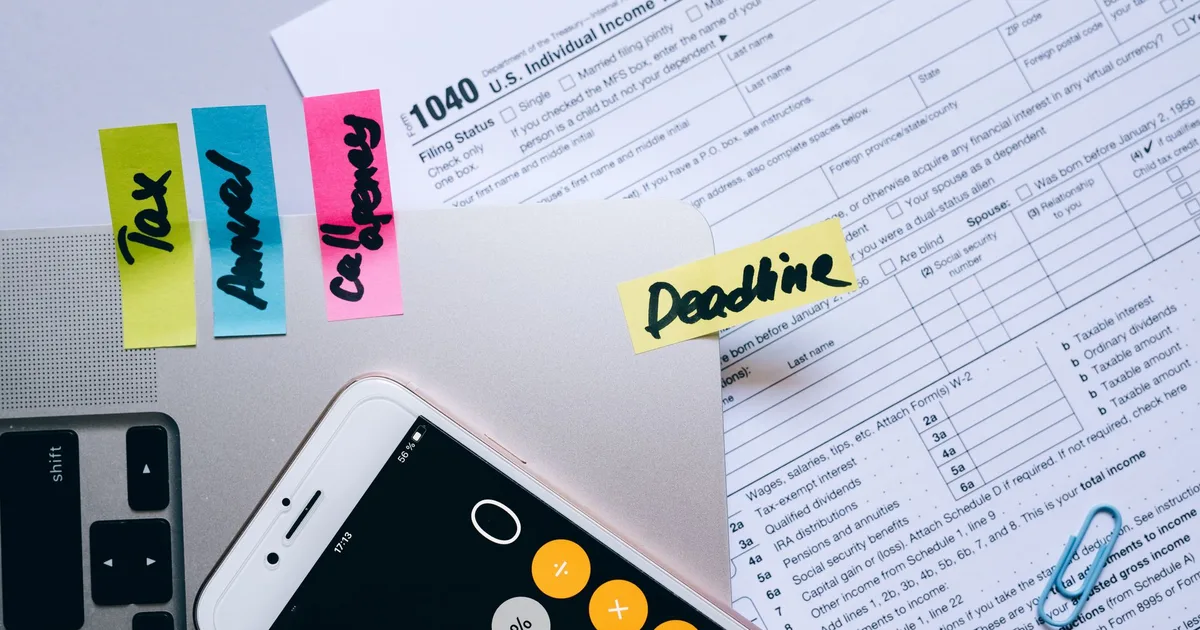
Your fourth quarter estimated tax payment is due January 15, 2027, but you can skip it by filing your 2026 return and paying the full balance by February 1, 2027. Q4 is the last chance to correct estimates that ran too low, so run your numbers before January 15.
By Casey Renee Tom | Reviewed November 2026 for tax year 2026
When is the fourth quarter estimated tax payment due for 2026?
January 15, 2027, which falls on a Friday, so the date does not shift. The fourth quarter covers September 1 through December 31, 2026, and it is the only installment that spans four months. That longer window, plus the fact that you now have real numbers for almost the whole year, makes Q4 the natural moment to true up your estimates before you file.
The full 2026 schedule is worth keeping in one place:
| Quarter | Income period | Due date |
|---|---|---|
| Q1 | January 1 to March 31, 2026 | April 15, 2026 |
| Q2 | April 1 to May 31, 2026 | June 15, 2026 |
| Q3 | June 1 to August 31, 2026 | September 15, 2026 |
| Q4 | September 1 to December 31, 2026 | January 15, 2027 |
If any deadline falls on a weekend or federal holiday, it moves to the next business day. Our quarterly tax deadlines guide tracks these shifts every year, and the quarterly estimated tax pillar explains how the whole system fits together.
How can you skip the January payment without a penalty?
File your 2026 tax return and pay everything you still owe by February 1, 2027. The IRS says filing and paying the full balance by January 31 means you do not have to make the January estimated payment. January 31, 2027 falls on a Sunday, so the cutoff moves to Monday, February 1. Once filed and paid in full, the January 15 installment is not required, and no fourth-quarter penalty applies.
The IRS publishes this option in its estimated tax guidance, but it comes with strict conditions. If your books are clean by mid-January and your December income is known, filing early can save you the January payment. The return must actually be filed and the balance actually paid by that date: an extension does not count, and neither does filing without paying. Miss the February 1 cutoff and the January 15 payment becomes required again, with penalty interest running from January 15.
A quick example makes it concrete. Tom is a self-employed photographer. His 2025 total tax was $12,000, so his 2026 safe harbor target is $12,000. His three estimated payments plus a little W-2 withholding total $9,600, leaving a $2,400 gap. He has two clean options: send a $2,400 estimated payment by January 15, 2027, or finish his return in January and file with whatever balance he owes by February 1. Hitting the safe harbor keeps the underpayment penalty off the table, and the February 1 filing makes the January 15 payment unnecessary in the first place.
Should you file early just to skip the January payment?
Only if your numbers are ready. Filing early to skip one estimated payment is a good deal when your books are already clean: you pay the same $2,400 either way, and you are done with 2026 in January. It is a bad deal when your records are incomplete. Guessing at December expenses to hit the February 1 date can produce a wrong return, and amending later costs more time than the January payment ever would.
A middle path works for many freelancers: make a conservative January 15 payment based on your best estimate, then file your return carefully in February or March. If the payment turns out to be slightly more than you owed, the excess comes back as a refund or rolls into your first 2027 payment. Overpaying a little in January is cheap insurance against a rushed, inaccurate return.
Also note that this shortcut is federal only. Most states run their own estimated tax schedules, and many do not offer a file-early exception. Check your state’s rules separately before assuming you can skip a state January payment.
What does a Q4 true-up actually involve?
A true-up means replacing the guesses you made in January with your actual full-year numbers, then paying the difference before the deadline. Because Q4 arrives when the year is nearly over, you can compute your real 2026 tax instead of estimating it, which is why the January payment is often the most accurate of the four. Follow these steps:
- Add up all 2026 income. Include every client payment, platform payout, and late-year 1099. Payers must send Form 1099-NEC or 1099-MISC when they paid you $2,000 or more in 2026, so chase down any that are missing before you finalize.
- Subtract your deductions. Tally business expenses, the home office deduction if you qualify, and the standard deduction: $16,100 for single filers or $32,200 for married filing jointly in 2026.
- Figure your total tax, including self-employment tax. Self-employment tax is 15.3% on 92.35% of your net earnings (net earnings of $400 or more trigger it), on top of your income tax. The Social Security portion applies up to the 2026 wage base of $184,500.
- Compare against a safe harbor. You generally avoid the underpayment penalty if you paid at least 90% of your actual 2026 tax, or 100% of your 2025 total tax (110% if your 2025 adjusted gross income was over $150,000). See our safe harbor guide for the full rules.
- Subtract what you already paid. Add your three 2026 estimated payments plus any withholding, which the IRS treats as paid evenly across the year.
- Pay the gap. Send the difference with your January 15 payment, or file your return by February 1 and pay the whole balance then.
Run your numbers through the free 1099 tax calculator before you commit to a payment amount.
What should be on your year-end checklist?
Work through these items in December or the first days of January, while there is still time to act on what you find. Each item either lowers your true-up payment, prevents a penalty, or sets up a cleaner start for 2027:
- Collect every 1099. The 2026 threshold for Forms 1099-NEC and 1099-MISC is $2,000 per payer. Compare each form against your own records and ask for corrections now, not in March.
- Recompute self-employment tax. At 15.3% on 92.35% of net earnings, SE tax is often the biggest surprise on a freelancer’s return. Net earnings of $400 or more mean you owe it, and the Social Security piece stops at the $184,500 wage base.
- Check your safe harbor position. If you are below 90% of this year’s tax or 100%/110% of last year’s, the January payment is what closes the gap.
- Look at withholding. If you or a spouse have a W-2 job, extra withholding before December 31 counts as paid across all four quarters, which can fix earlier shortfalls that an estimated payment cannot.
- Note December income spikes. A big December invoice counts in Q4’s income period, so make sure the true-up includes it.
- Decide what to do with an overpayment. If the true-up shows you paid too much, you can take a refund or apply the overpayment to your first 2027 quarterly payment right on your return.
- Start sketching your 2027 estimates. The first 2027 quarterly payment is due April 15, 2027. Use your finalized 2026 total tax as the baseline for the prior-year safe harbor (100%, or 110% if your 2026 AGI topped $150,000).
What if the true-up shows you overpaid?
An overpayment at year-end is good news either way. When you file your 2026 return, you can take it as a refund or apply some or all of it as a credit toward your first 2027 estimated payment, which is due April 15, 2027. You make this choice directly on your return.
Applying the overpayment forward is often the smarter move for a freelancer who expects similar income in 2027. It gives your Q1 installment a head start and reduces the cash you need to find in April. Just remember that the credit applies to Q1 first; it does not change the other three deadlines.
What if you cannot pay the balance by February 1?
Then make the January 15 payment. The February 1 shortcut only works if you file and pay in full, so if your records are messy or your December invoices have not landed, do not force an early return with wrong numbers. A wrong return creates bigger problems than a missed shortcut.
The January 15 payment is what keeps the penalty meter from running on Q4. If you cannot pay the full gap, pay what you can: the underpayment penalty is charged on the unpaid portion from January 15 until you pay it, so every dollar you send now reduces the interest that accrues later. Then file your return by April 15, 2027, pay the remaining balance, and start 2027 with cleaner estimates.
This article is for education only and is not tax advice. Tax rules and rates can change; confirm every deadline and figure at IRS.gov or with a qualified tax professional before you file or pay.
References
- IRS: Estimated Taxes — https://www.irs.gov/businesses/small-businesses-self-employed/estimated-taxes
- IRS: About Form 1040-ES, Estimated Tax for Individuals — https://www.irs.gov/forms-pubs/about-form-1040-es
- IRS: Publication 505, Tax Withholding and Estimated Tax — https://www.irs.gov/publications/p505
Our free 1099 tax calculator applies the official 2026 IRS figures.