By Casey Renee Tom | Reviewed November 2026 for tax year 2026
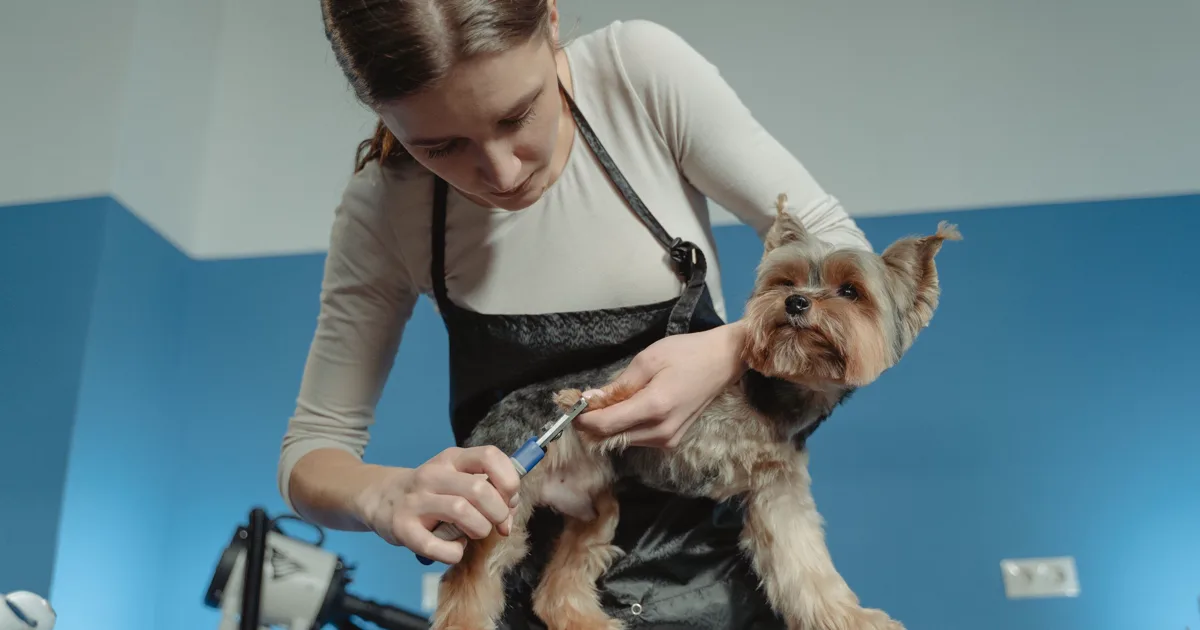
Dog groomer taxes are the US federal tax rules that apply when you earn money bathing, trimming, and styling dogs as a self-employed groomer. The IRS treats you as a sole proprietor whether you rent a booth, groom from home, or drive a van to clients. You report the income on Schedule C, pay income tax plus self-employment tax on your profit, and make quarterly estimated payments when you owe $1,000 or more.
Do dog groomers have to pay taxes?
Yes. Every dollar you earn from grooming is taxable income, from the first appointment.
Your filing duty depends on profit, not gross receipts. You must file a return and pay self-employment tax if your net earnings from self-employment, revenue minus deductible expenses, reach $400 for the year, under 26 U.S.C. section 1402(b).
How much is self-employment tax for a dog groomer?
Self-employment tax is 15.3 percent of your net earnings from self-employment, and it applies once those net earnings reach $400 for the year. The rate has two parts: 12.4 percent for Social Security and 2.9 percent for Medicare, under IRS Schedule SE for tax year 2026. Schedule SE first multiplies net profit by 92.35 percent to get net earnings, then applies the 15.3 percent rate. The Social Security portion applies only to the first $184,500 of combined wages and net earnings for 2026, the wage base published by the Social Security Administration. The Medicare portion has no cap.
Take a groomer with $40,000 of net profit. Net earnings are $40,000 times 0.9235, or $36,940, and self-employment tax of 15.3 percent comes to about $5,652. You can deduct one-half of that tax, about $2,826, on Schedule 1 of Form 1040, line 15. Our independent worker tax guide shows how self-employment tax fits into a full return.
Can dog groomers deduct their tips under no tax on tips?
Yes, for 2026. The One Big Beautiful Bill Act added Internal Revenue Code section 224, which lets workers in listed tipped occupations deduct up to $25,000 of qualified tips a year from federal income tax for tax years 2025 through 2028. Treasury’s final regulations (TD 10044, Federal Register, April 13, 2026) place pet groomers under Treasury Tipped Occupation Code 506, Pet and Show Animal Caretakers. Claim it on Schedule 1-A (Form 1040), Part II, whether you itemize or take the standard deduction.
Four conditions decide whether your tips qualify. The tip must be voluntary, not negotiated, and set by the customer. It must appear on an information return, such as a Form 1099, or be reported by you on Form 4137. Your modified adjusted gross income must stay under the phaseout, which starts at $150,000 single and $300,000 joint. If you are married, you must file jointly, and tips from your grooming business cannot exceed its net profit. The deduction cuts federal income tax only. It does not reduce self-employment tax, so the 15.3 percent still applies to your full net earnings. Keep a daily tip log; an unreported tip does not qualify.
Which 1099 form will a dog groomer get?
Most groomers take card payments through Square, Stripe, or a booking app, and those processors report on Form 1099-K. A business client that pays you directly, such as a pet store or a rescue, reports on Form 1099-NEC. Private pet owners send you nothing, since a pet owner paying for personal care has no 1099 filing duty.
| Payer | Form | 2026 federal threshold |
|---|---|---|
| Card processor (Square, Stripe) | 1099-K | Over $20,000 and over 200 transactions |
| Business client | 1099-NEC | $2,000 or more |
The One Big Beautiful Bill Act restored the 1099-K rule of more than $20,000 in gross payments and more than 200 transactions; both conditions must hold, and some states set lower thresholds. The 1099-NEC threshold rose from $600 to $2,000 for payments made after December 31, 2025, so older guides that say $600 are out of date for 2026. A 1099-K reports gross card payments before the processor’s fee, so its number runs higher than your bank deposits. Most part-time groomers never reach either threshold; report all income from your own records.
What can dog groomers deduct?
You can deduct any ordinary and necessary cost of running your grooming business, under Internal Revenue Code section 162.
| Deduction | Schedule C line | Notes for 2026 |
|---|---|---|
| Mileage or van costs | Line 9 | 72.5 cents per mile Jan-Jun; 76 cents Jul-Dec |
| Booth rent | Line 20b | Chair or station rent in a salon |
| Liability insurance | Line 15 | Includes care-custody-control coverage |
| Supplies | Line 22 | Shampoo, clippers, blades, towels, bows |
| Depreciation and Section 179 | Line 13 | Grooming tables, tubs, dryers, van buildout |
| Contract labor | Line 11 | 1099-NEC at $2,000+ |
| Home office | Line 30 | $5 per sq ft, max $1,500 |
| Cost of goods sold | Line 42 | Retail shampoo, treats, collars |
Mileage is usually the biggest deduction for a mobile groomer. The drive from one client’s home to the next counts. The drive from home to your first job of the day is a personal commute and does not count, under IRS Publication 463 (2025). A mobile groomer with 12,000 business miles split evenly across the year deducts $8,910. The de minimis safe harbor lets you expense items costing $2,500 or less each instead of depreciating them.
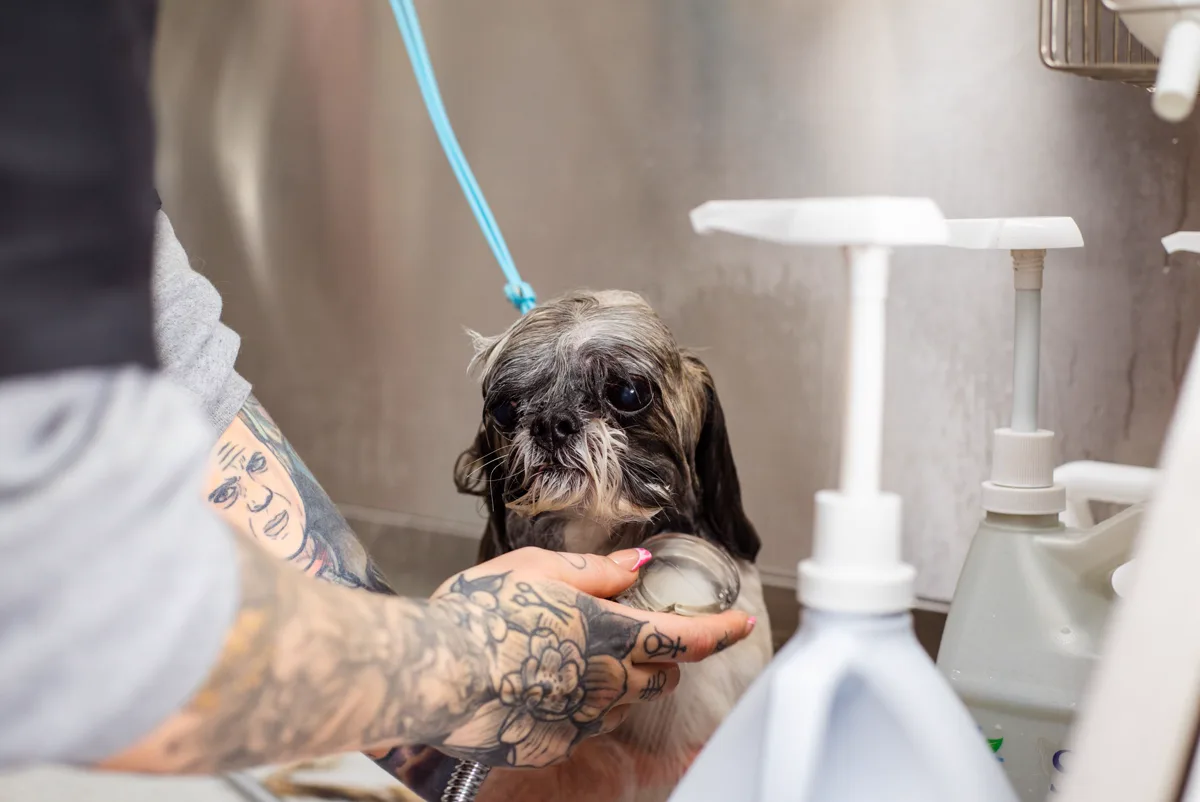
Photo by Goochie Poochie Grooming on Pexels. Source: https://www.pexels.com/photo/dog-in-bath-19145888/
See what your grooming profit means for your tax bill with our free 1099 tax calculator, no signup needed: Estimate your 2026 dog groomer taxes with our free tax tools.
How does the grooming van work for taxes?
The van follows the vehicle rules; the tub, generator, water tanks, and dryer inside it are equipment.
For the van, weight and layout decide how much you can expense. A cargo van rated over 6,000 pounds gross vehicle weight rating, with no seating behind the driver, is not a sport utility vehicle for Section 179 purposes, under Internal Revenue Code section 179(b)(5)(B)(ii)(III). Sport utility vehicles between 6,001 and 14,000 pounds are capped at $32,000 of Section 179 expensing for 2026, so a qualifying cargo van can have its full business-use cost expensed, up to the $2,560,000 general limit. A lighter passenger vehicle is capped much lower: Revenue Procedure 2026-15 limits first-year depreciation to $20,300 when bonus depreciation applies. A tub, generator, and dryer are business equipment, and Section 179 lets you expense their full cost in the year you place them in service. Bonus depreciation at 100 percent also applies to property acquired and placed in service after January 19, 2025.
If you claim Section 179 or bonus depreciation on the van, you must use actual expenses and cannot use the standard mileage rate. To use the mileage rate, you must choose it in the first year the van is in service for business, under IRS Publication 463 (2025). You can switch from mileage to actual expenses later, but not back.
How do retail product sales work for taxes?
Report retail sales of shampoo, treats, and collars as gross receipts, and deduct what you paid for the products as cost of goods sold in Part III of Schedule C, line 42.
Under Internal Revenue Code section 471(c), a business with average annual gross receipts of $32 million or less over the prior three years for 2026 can treat retail stock as non-incidental materials and supplies, deducting the cost in the year the item is sold, so most groomers can skip formal inventory accounting.
Sales tax belongs to your state, not the IRS. Retail sales of shampoo and treats are taxable in most states, so you must collect the tax and send it to your state revenue department. Grooming services are taxable in some states and exempt in others, so check your state revenue department before your first sale and register for a sales tax permit if your state requires one.
Can a home-based groomer deduct a home office?
Yes, if the space is used regularly and exclusively for grooming, under Internal Revenue Code section 280A. A spare room set up for grooming qualifies; a kitchen table you also eat at does not. The simplified method gives you $5 per square foot, up to $1,500 a year, under Revenue Procedure 2013-13. The regular method deducts a share of mortgage interest, utilities, and insurance, but takes more recordkeeping. Booth rent in a salon is simpler: the monthly rent for a chair or station is rent of other business property on Schedule C, line 20b.
When do dog groomers pay quarterly estimated taxes?
No one withholds income tax from grooming fees, so you pay during the year. If you expect to owe $1,000 or more in federal tax for 2026 after withholding and credits, you must make estimated payments using Form 1040-ES. The 2026 due dates are April 15, June 15, and September 15, 2026, and January 15, 2027. The safe harbor rule protects you from the underpayment penalty if you pay at least 90 percent of this year’s tax or 100 percent of last year’s. If last year’s adjusted gross income was over $150,000, the second figure rises to 110 percent.
Can dog groomers claim the QBI deduction?
The qualified business income deduction under Internal Revenue Code section 199A lets most sole proprietors deduct up to 20 percent of their qualified business income, and dog grooming is not a specified service trade or business under the section 199A list.
The full 20 percent applies when your taxable income before the deduction is at or below $201,750 single or $403,500 joint in 2026, under Revenue Procedure 2025-32. Above those figures, wage and property limits phase in over the next $75,000 single or $150,000 joint. You claim it on Form 1040, line 13. It reduces taxable income, not adjusted gross income, and it does not reduce self-employment tax.
Frequently asked questions
Do I owe tax on grooming income if I never get a 1099?
Yes. The 1099 thresholds decide when a payer must send you a form, not when income becomes taxable. Grooming income is taxable from the first dollar, and self-employment tax starts once net earnings reach $400 for the year.
Can I deduct my grooming van if I also drive it for personal trips?
Yes, for the business portion only. Track business and personal miles separately, and deduct only the business share of the van’s cost. Section 179 requires business use above 50 percent.
Do I need an LLC to deduct grooming expenses?
No. Most groomers are sole proprietors by default, and a sole proprietor files Schedule C and claims the same deductions. An LLC changes your legal liability and state filings, not the federal deductions available to you. Dog walkers and pet sitters face the same choice.
Conclusion
Report all income on Schedule C. Pay self-employment tax of 15.3 percent on 92.35 percent of net profit once net earnings reach $400. Claim the section 224 tip deduction for 2026 if your tips are reported. Make quarterly estimated payments when you expect to owe $1,000 or more.
Run your 2026 numbers with our free tax tools, no signup needed: Estimate your dog groomer taxes with our free 1099 tax tools.
This article is for education only and is not tax advice. Tax rules change, and your situation may differ. Check IRS.gov or talk to a qualified tax professional before you file.
References
Internal Revenue Service, Fact Sheet FS-2026-04, Schedule 1-A, Additional Deductions: What to know about the new form, March 2026. https://www.irs.gov/newsroom/schedule-1-a-additional-deductions-what-to-know-about-the-new-form
Internal Revenue Service and Department of the Treasury, TD 10044, Occupations That Customarily and Regularly Received Tips; Definition of Qualified Tips, final regulations, Federal Register Vol. 91, No. 70, April 13, 2026 (FR Doc. 2026-07104). https://www.govinfo.gov/content/pkg/FR-2026-04-13/html/2026-07104.htm
Internal Revenue Service, Fact Sheet FS-2025-08, IRS revises and updates Form 1099-K frequently asked questions, October 2025. https://www.eitc.irs.gov/pub/taxpros/fs-2025-08.pdf
Internal Revenue Service, Instructions for Forms 1099-MISC and 1099-NEC, for tax year 2026. https://www.irs.gov/instructions/i1099mec
Internal Revenue Service, Schedule C (Form 1040), Profit or Loss From Business, instructions for tax year 2026. https://www.irs.gov/instructions/i1040sc
Internal Revenue Service, Schedule SE (Form 1040), Self-Employment Tax, instructions for tax year 2026. https://www.irs.gov/instructions/i1040se
Internal Revenue Service, Self-employment tax (Social Security and Medicare taxes). https://www.irs.gov/businesses/small-businesses-self-employed/self-employment-tax-social-security-and-medicare-taxes
Internal Revenue Service, Publication 463, Travel, Gift, and Car Expenses, 2025. https://www.irs.gov/publications/p463
Internal Revenue Service, Publication 946, How To Depreciate Property, 2025. https://www.irs.gov/publications/p946
Internal Revenue Service, Publication 334, Tax Guide for Small Business, 2025. https://www.irs.gov/publications/p334
Internal Revenue Service, Notice 2026-10 and Announcement 2026-11, Standard mileage rates for 2026. https://www.irs.gov/tax-professionals/standard-mileage-rates
Internal Revenue Service, Revenue Procedure 2025-32, Annual inflation adjustments for tax year 2026. https://www.irs.gov/pub/irs-drop/rp-25-32.pdf
Internal Revenue Service, Revenue Procedure 2026-15, Depreciation limitations for passenger automobiles placed in service in 2026. https://www.irs.gov/pub/irs-drop/rp-26-15.pdf
Internal Revenue Service, Revenue Procedure 2013-13, Simplified method for home office deduction. https://www.irs.gov/pub/irs-drop/rp-13-13.pdf
Internal Revenue Service, Form 1040-ES, Estimated Tax for Individuals, instructions for 2026. https://www.irs.gov/forms-pubs/about-form-1040-es
Internal Revenue Service, Estimated taxes. https://www.irs.gov/businesses/small-businesses-self-employed/estimated-taxes
Internal Revenue Service, Qualified business income deduction. https://www.irs.gov/newsroom/qualified-business-income-deduction
Internal Revenue Service, About Form 4137, Social Security and Medicare Tax on Unreported Tip Income. https://www.irs.gov/forms-pubs/about-form-4137
Social Security Administration, Contribution and benefit base for 2026 ($184,500). https://www.ssa.gov/oact/cola/cbb.html