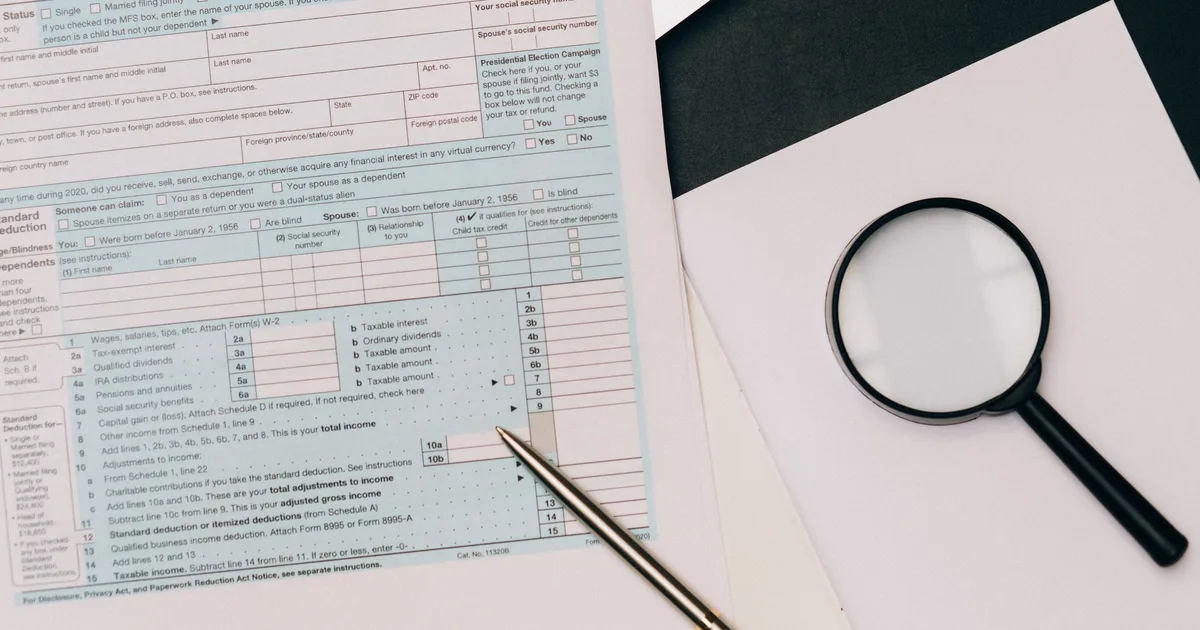
Form 2210 figures the IRS underpayment of estimated tax penalty. Most filers never need it: the IRS will calculate the penalty and send a bill. You must file only to request a waiver, annualize uneven income, or use actual withholding dates.
By Casey Renee Tom | Reviewed November 2026 for tax year 2026
Form 2210 has an intimidating reputation it mostly does not deserve. Its full name is Underpayment of Estimated Tax by Individuals, Estates, and Trusts, and in most cases you can ignore it completely. The form only becomes mandatory in a handful of situations, and those situations are exactly when it can save you money. This guide covers when to file, what each checkbox does, and how to complete it without overpaying.
What is Form 2210?
Form 2210 is the IRS worksheet that decides whether you owe a penalty for underpaying estimated tax and how large that penalty is. It compares the tax you paid during 2026, through withholding and quarterly estimated payments, against what you were required to pay by each deadline. If you paid too little too late, the form computes the penalty quarter by quarter using the IRS interest rates for 2026.
The form has four parts plus a schedule. Part I works out your required annual payment. Part II is a set of checkboxes for the special situations that force you to file. Part III figures each quarter’s shortfall, and Part IV turns those shortfalls into a dollar penalty. Schedule AI handles the annualized income installment method for uneven income.
Do you have to file Form 2210?
In most cases, no. If your situation is straightforward, skip the form: leave the estimated tax penalty line on your Form 1040 blank, and the IRS will figure the penalty for you and send a bill. That is the official guidance in the Form 2210 instructions, and it is the right choice for most freelancers who simply paid late or paid short.
There is one catch. The IRS computes only the plain version. It will not annualize uneven income, will not use your actual withholding dates, and will not consider a waiver request. If any of those would lower your bill, you have to file Form 2210 yourself and claim them. You also do not need the form at all if no penalty applies, for example when you owe less than $1,000 after withholding or you met a safe harbor.
When must you file Form 2210?
You must file Form 2210 with your return when any of four situations applies: you are requesting a full or partial waiver, your income was uneven and the annualized method helps, or your withholding dates beat the even-split treatment. If none of these fits, do not file.
- You are asking the IRS to waive the entire penalty.
- You are asking the IRS to waive part of the penalty.
- Your income arrived unevenly during the year and the annualized income installment method lowers your penalty.
- Your penalty is smaller when withholding is treated as paid on the actual dates it was withheld instead of spread evenly across the four due dates.
If none of these fits, do not file. Filing an unnecessary Form 2210 does not hurt you, but it wastes your time and invites arithmetic mistakes the IRS would otherwise handle.
What does each box in Part II mean?
Part II, titled Reasons for Filing, has four checkboxes, and you check every box that applies to you. Each box tells the IRS which special treatment you are claiming, and each one comes with its own paperwork, as the table shows:
| Box | What it means | What you must do |
|---|---|---|
| A | You request a waiver of the entire penalty | Complete page 1 only and attach a written statement explaining why |
| B | You request a waiver of part of the penalty | Figure the penalty, enter the waived amount in parentheses on the dotted line next to the penalty, and attach a statement |
| C | Your income varied and the annualized income installment method reduces or eliminates the penalty | Complete Schedule AI and carry the results into the penalty computation |
| D | Your penalty is lower treating withholding as paid on the actual withholding dates | Figure the penalty using those dates instead of the four equal installments |
Box A is the only one where you do not compute a penalty at all. You are telling the IRS the whole thing should go away and explaining why in the attached statement. Boxes B, C, and D all require the full computation, because you are disputing the amount.
Which waiver reasons does the IRS accept?
The instructions recognize two groups of waiver reasons. The first covers casualty, disaster, or other unusual circumstances where charging the penalty would be against equity and good conscience. A house fire that destroyed your records, a federally declared disaster, or an illness that kept you from managing payments can qualify. You check box A or B and attach a statement describing what happened and how it prevented payment.
The second covers retirement and disability. If you retired after reaching age 62, or became disabled, during 2026 or 2025, and the underpayment was due to reasonable cause rather than willful neglect, you can request a waiver. Reasonable cause here means something genuinely beyond your control, like the cognitive or financial disruption that can follow a major health event, not simply forgetting the deadlines. Attach documentation of the retirement or disability along with your statement.
One caution: checking the box does not grant the waiver by itself. The IRS decides on the facts in your statement, so write it plainly, include dates and supporting documents, and keep a copy.
How do you fill out Form 2210 step by step?
Gather these before you start: your total 2026 tax from Form 1040, your total federal withholding, and the date and amount of every 2026 estimated payment. With those in hand, work through the form in order, from Part I to Part IV:
- Complete Part I to find your required annual payment. This is the smaller of 90% of your 2026 tax or 100% of your 2025 tax, or 110% of your 2025 tax if your 2025 AGI exceeded $150,000. If what you paid meets this number, stop. No penalty, no form.
- Check the boxes in Part II that apply, using the table above. If you checked box A only, complete page 1, attach your waiver statement, and file.
- Complete Part III to find each quarter’s underpayment. List what you were required to pay each quarter against what you actually paid by each due date.
- If you checked box C, complete Schedule AI instead of the regular Part III lines. Annualize your income for each of the four periods and use the smaller of the annualized installment or the regular installment for each quarter.
- Complete Part IV to figure the penalty. Apply the 2026 IRS underpayment rates, 7% for January through March, 6% for April through June, and 7% for July through December, to each quarter’s shortfall for the days it lasted. Our guide to how the IRS calculates the underpayment penalty walks through this math with a worked example.
- Attach the completed Form 2210, plus Schedule AI and any waiver statement, to your Form 1040 and file by April 15, 2027.
Tax software handles all of this if you answer its estimated tax questions honestly, including the uneven income and waiver questions most people skip. Paper filers should place the form directly behind the return. Once this year’s form is filed, run your numbers through a free 1099 tax calculator each quarter so next year’s installments match what you actually owe.
What is Schedule AI and who should use it?
Schedule AI is the annualized income installment method, and it exists for people whose income did not arrive evenly. Think of a freelancer who earned little until a big contract paid out in November, or a consultant who sold a business in October. Under the regular method, the IRS assumes each quarter owed 25% of the annual amount, which can create phantom shortfalls in quarters when the income did not exist yet.
Schedule AI divides the year into four cumulative windows: January through March, January through May, January through August, and the full year. For each window you figure your income, deductions, and tax as if that partial-year amount represented a full year, which annualizes it. The form then compares the annualized installment to the regular installment for each quarter and uses whichever is smaller. The result can cut the penalty sharply or erase it, but the bookkeeping is real work: you need income and deduction totals for each window, not just the year.
What mistakes do filers make with Form 2210?
The most common mistake is filing it when the IRS would have done the work for free. The second is the opposite: skipping it when the annualized method or a waiver would have saved real money, usually because the filer did not know those options existed.
Three smaller errors show up often. One is checking box C but never completing Schedule AI, which the IRS treats as an incomplete claim. Another is requesting a waiver with no attached statement, just the checked box, which gives the IRS nothing to grant. The third is forgetting that farmers and fishermen do not use this form at all; they use Form 2210-F with its own rules. If you missed a quarterly payment this year and your income was lumpy, run the Schedule AI numbers before deciding the penalty is simply what it is.
Frequently asked questions
Where do I get Form 2210 and its instructions?
Download both from the IRS: the About Form 2210 page links to the current form and the full instructions. Use the version for the tax year you are filing, since line numbers and rates change.
When is Form 2210 due?
It is due with your return, April 15, 2027 for tax year 2026. If you file for an extension, the extended due date applies to the form as well, but an extension to file is not an extension to pay: the penalty clock on any 2026 shortfall keeps running until you pay.
Will my tax software handle Form 2210?
Yes, if you give it the inputs. Answer the estimated tax section completely, including uneven income and waiver questions, and the software generates Form 2210 and Schedule AI automatically. What software cannot do is write your waiver statement; that part is yours.
Does Form 2210 apply tofour due dates?
No. Form 2210 is federal only. Most states with income taxes have their own underpayment penalties and their own forms, with different rates and thresholds. Handle the federal form first, then check your state’s equivalent.
I already paid the penalty the IRS billed me. Can I still request a waiver?
You can request a refund of a penalty already paid, but that goes through a different process, generally Form 843, Claim for Refund and Request for Abatement, not Form 2210. The waiver boxes on Form 2210 are for penalties not yet assessed.
This article is for education only and is not tax advice. Tax rules change, and your situation may differ. Check IRS.gov or talk to a tax professional before acting.
References
- IRS: About Form 2210, Underpayment of Estimated Tax by Individuals, Estates, and Trusts — https://www.irs.gov/forms-pubs/about-form-2210
- IRS: Instructions for Form 2210 (PDF) — https://www.irs.gov/pub/irs-pdf/i2210.pdf
Our free 1099 tax calculator applies the official 2026 IRS figures.