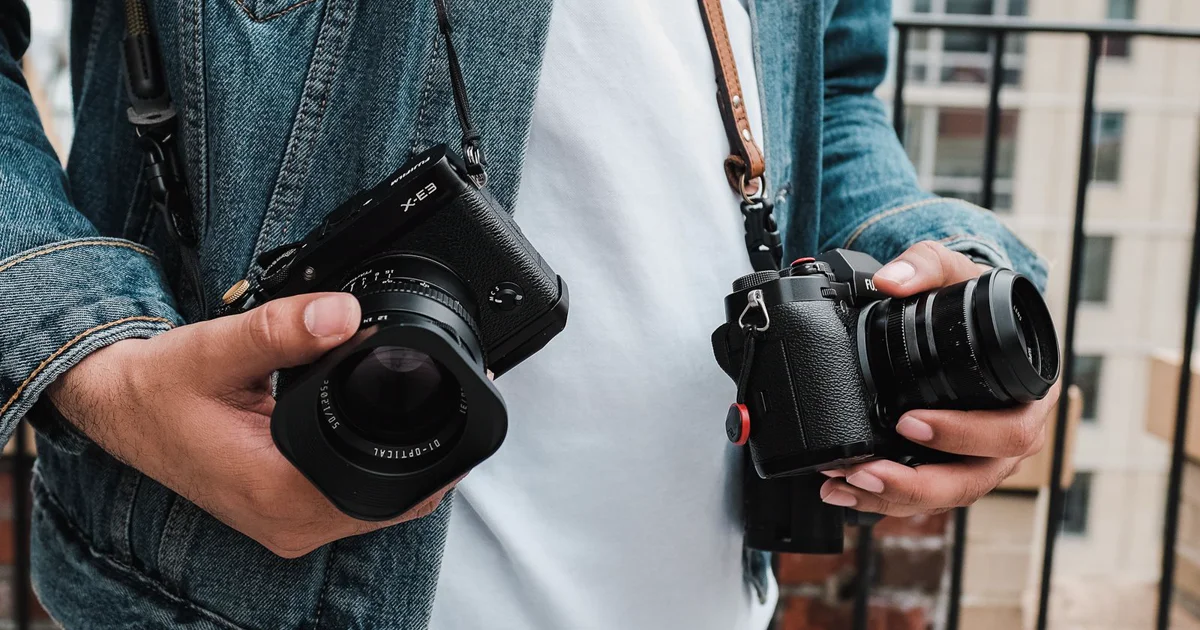
Photographer Equipment Tax Deduction: Section 179 Rules for Cameras and Gear
By Casey Renee Tom | Reviewed November 2026 for tax year 2026
What is the photographer equipment tax deduction? The term covers a set of three IRS rules that let a self-employed photographer write off camera bodies, lenses, lighting, drones, computers, and editing software in the year the gear goes to work: Section 179 expensing, bonus depreciation, and the de minimis safe harbor. For tax year 2026, Section 179 lets you expense up to $2,560,000 of qualifying equipment placed in service during the year, under Revenue Procedure 2025-32, section 4.24. This guide covers the mechanics: what qualifies, the 2026 limits, when each rule wins, how personal use limits the write-off, and recapture.
For the broader rules that apply to all freelancers, see The Complete Tax Guide for Freelancers and Consultants.
How gear deductions fit a photographer’s tax picture
A freelance photographer pays two layers of tax on net profit: ordinary income tax and self-employment tax. Self-employment tax is 15.3 percent on 92.35 percent of net earnings: 12.4 percent Social Security on the first $184,500 for 2026, plus 2.9 percent Medicare with no cap, per IRS Schedule SE for tax year 2026. You owe it once net earnings reach $400 for the year, and one half of it is deductible on Form 1040 Schedule 1, line 15.
Equipment deductions reduce both taxes at once, because every deductible dollar lowers the Schedule C net profit feeding both calculations. A $4,000 camera body deducted in full removes $4,000 from net earnings before the SE tax math runs. That double effect is why placing gear in service before December 31 matters.
Section 179 for cameras, lenses, and lighting
Section 179 lets a business elect to expense qualifying equipment in the year it is placed in service instead of depreciating it over several years. A camera body, lens, strobe, drone, editing laptop, and off-the-shelf editing software can all qualify, provided you bought them, placed them in service in 2026, and use them more than 50 percent for your photography business, per IRS Publication 946, How to Depreciate Property (2025 edition).
Three limits control the deduction for 2026:
- The maximum you may elect to expense is $2,560,000 for tax years beginning in 2026, per Revenue Procedure 2025-32, section 4.24. No solo photographer’s gear spend will approach it.
- If the total cost of qualifying property placed in service in 2026 exceeds $4,090,000, the $2,560,000 ceiling shrinks dollar for dollar, per the same Revenue Procedure, a problem only very large businesses face.
- The taxable income limit: your Section 179 deduction cannot exceed your aggregate taxable income from your active trade or business, and it cannot create a net loss. If your photography business earned $30,000 and you bought a $40,000 cinema camera, you deduct $30,000 in 2026 and carry the remaining $10,000 forward indefinitely. You make the election on Form 4562, and the amount flows to Schedule C, line 13.
Used gear qualifies under Section 179 as long as it is new to you and not bought from a related party, a point Publication 946 (2025) covers under “Property Acquired by Purchase.” The second-hand Sony body from a stranger qualifies for Section 179; the one from your sibling does not.
Bonus depreciation: 100 percent and permanent in 2026
For property acquired after January 19, 2025, the special depreciation allowance under section 168(k) is 100 percent and permanent, as implemented in IRS Notice 2026-11. The One, Big, Beautiful Bill Act (Public Law 119-21, signed July 4, 2025) ended the old phase-down schedule. A $6,500 camera bought and placed in service in 2026 is fully deductible in 2026 through bonus depreciation alone.
Three differences from Section 179 decide which rule to use:
- No income limit: bonus depreciation can create or increase a net loss. Section 179 cannot.
- Automatic by default: bonus depreciation is automatic; Section 179 requires an election.
- Order of operations: Section 179 applies first; bonus depreciation takes whatever basis remains. Elect $2,000 of Section 179 on a $6,500 camera, and bonus depreciation covers the remaining $4,500.
One date controls the rate: the acquisition date. Gear locked in under a written binding contract on or before January 19, 2025 follows the old phase-down percentages even if placed in service in 2026, per Notice 2026-11. And placed in service still decides the tax year, so gear bought in December 2026 but unused until February 2027 is a 2027 deduction.
The de minimis safe harbor: the $2,500 rule for small gear
The de minimis safe harbor under Treasury Regulation section 1.263(a)-1(f) lets a business expense low-cost tangible property immediately, with no Form 4562 and no depreciation schedule. Per the IRS tangible property final regulations page, a taxpayer without an applicable financial statement (virtually every solo photographer) may deduct amounts up to $2,500 per invoice or per item, as substantiated by invoice. Ten $900 monitors on one invoice are ten qualifying items, not one $9,000 purchase.
For photographers this covers memory cards, batteries, filters, straps, cleaning kits, and any lens or modifier at $2,500 or less per item. It is the only rule with a paperwork step most photographers miss: attach a statement titled “Section 1.263(a)-1(f) de minimis safe harbor election” to your timely filed original return each year you use it, and keep accounting procedures that expense amounts below the threshold in place from the start of the tax year. The election covers every qualifying item that year; you cannot expense one $2,000 lens and capitalize an identical one.
A practical split: accessories at $2,500 or less per item go to the de minimis safe harbor; camera bodies and pro lenses above that go to Section 179 or bonus depreciation.
The three rules at a glance:
| Rule | 2026 limit | Best for |
|---|---|---|
| Section 179 | $2,560,000 election; taxable-income cap | Choosing which gear to expense |
| Bonus depreciation | 100%; no dollar cap | Big purchases in a low-income year |
| De minimis safe harbor | $2,500 per item | Accessories: cards, batteries, straps |
See what you’d owe with our free 1099 tax calculator, which applies the official 2026 IRS figures: See what you’d owe with our free 1099 tax calculator →
Listed property and the business-use percentage
Photographic equipment is listed property. Under section 280F, listed property includes photographic, video, and sound recording equipment of a type generally used for entertainment, recreation, or amusement, per Publication 946 (2025). Two consequences follow.
Stricter records
Section 274(d) requires adequate records for listed property: a log kept near the time of use showing the date, business purpose, and use. A photographer shooting weddings 80 percent of the time and family snapshots 20 percent must prove that split from records.
The 50 percent test
If business use is 50 percent or less in the year the gear is placed in service, Section 179 and bonus depreciation are unavailable, and you must use the slower straight-line method. If business use drops to 50 percent or less in a later year, you recapture the excess depreciation as ordinary income. Computers were removed from listed property for property placed in service after 2017, but Section 179 still requires more than 50 percent business use for them.
A $6,000 camera body used 80 percent for client work yields a $4,800 depreciable basis, because only the business-use portion counts.
Recapture: when the deduction comes back
If business use of your gear falls to 50 percent or less in a later year, you recapture the excess depreciation as ordinary income, generally on Form 4797, per Publication 946 (2025). Sell the camera before its recovery period ends and section 1245 treats the gain attributable to depreciation as ordinary income, also on Form 4797. The classic trap is the career pivot: the wedding business fades and the gear bought with Section 179 starts shooting only family vacations, triggering recapture. Items expensed under the de minimis safe harbor have no depreciation to recapture.
Quarterly estimated taxes: gear changes what you owe
A big equipment purchase lowers your expected annual tax, which changes your quarterly estimates. The 2026 deadlines are April 15, June 15, and September 15, 2026, plus January 15, 2027, per the Instructions for Form 1040-ES (2026). To avoid the underpayment penalty, pay the smaller of 90 percent of the current year’s tax or 100 percent of last year’s tax (110 percent at higher incomes), per Publication 505 (2026). A photographer who buys a $10,000 gear package in March can generally reduce the June 15 estimate, but only within the safe-harbor math; skip an estimate and the Form 2210 penalty accrues quarter by quarter.
Retirement in one paragraph
Equipment write-offs reduce taxable income, which also reduces deductible retirement plan room. For 2026, a solo 401(k) allows elective deferrals of $24,500, plus $8,000 at age 50 and older and $11,250 for ages 60 through 63, with total additions of $72,000, per IR-2025-103. A SEP IRA can be established and funded up to the filing deadline including extensions, but it takes only employer contributions, so run the contribution math after the gear deduction is final.
Frequently asked questions
Can I deduct a camera in full in the year I buy it?
Usually yes. For 2026, a camera used more than 50 percent for your photography business can be fully expensed through Section 179 (up to the $2,560,000 limit), through 100 percent bonus depreciation for property acquired after January 19, 2025, or, at $2,500 or less per item, through the de minimis safe harbor, per Revenue Procedure 2025-32, Notice 2026-11, and Treasury Regulation section 1.263(a)-1(f). The gear must be placed in service before December 31, 2026.
Does Section 179 apply to used camera gear?
Yes, if it is new to you and bought from an unrelated party. Publication 946 (2025) confirms Section 179 tests purchase from an unrelated party, not age: the second-hand lens bought from a stranger qualifies; the body bought from your brother does not.
What if I use my camera for personal photos too?
Reduce the deduction to the business-use percentage. An $8,000 camera used 75 percent for client shoots gives a $6,000 depreciable basis. Photographic equipment is listed property under section 280F, so keep a log of business versus personal use. At 50 percent business use or less, Section 179 and bonus depreciation are unavailable.
Section 179 or bonus depreciation: which is better for gear?
They usually give the same first-year result. Section 179 wins when you want to choose which assets to expense and how much per asset. Bonus depreciation wins when the deduction would exceed your business income, because it has no income limit and can create a loss. Both require more than 50 percent business use.
Do I need to keep receipts and a usage log?
Yes. Section 274(d) requires adequate records for listed property, and the IRS can disallow the deduction without them. Keep purchase invoices with price and date, plus a log of business versus personal use. For the de minimis safe harbor, keep the annual election statement and a capitalization policy in place at the start of the tax year.
Does my state follow the federal equipment rules?
Several states decouple from Section 179 or bonus depreciation, so your state return may depreciate gear the federal return expensed. Check your state department of revenue before assuming the federal deduction carries over.
Bottom line
For 2026, a self-employed photographer has three paths to write off gear: Section 179 expensing up to $2,560,000, permanent 100 percent bonus depreciation for property acquired after January 19, 2025, and the $2,500 per-item de minimis safe harbor. Cameras are listed property, so the more-than-50-percent business-use test and a usage log are the price of admission. Recapture claws the deduction back if business use falls, and large purchases should reset your quarterly estimates.
Run your 2026 numbers with our free tax tools, no signup required: Run your 2026 numbers with our free tax tools →
References
- IRS, Revenue Procedure 2025-32, section 4.24 (tax year 2026 inflation adjustments; Section 179 limit $2,560,000, phase-out $4,090,000), https://www.irs.gov/irb/2025-45_IRB
- IRS, IR-2025-103, “IRS releases tax inflation adjustments for tax year 2026, including amendments from the One, Big, Beautiful Bill” (Oct. 9, 2025), https://www.irs.gov/newsroom/irs-releases-tax-inflation-adjustments-for-tax-year-2026-including-amendments-from-the-one-big-beautiful-bill
- IRS, Notice 2026-11, “Interim Guidance on Additional First Year Depreciation Deduction under section 168(k)” (Jan. 14, 2026), https://www.irs.gov/pub/irs-drop/n-26-11.pdf
- IRS, Publication 946, How to Depreciate Property (2025 edition) (Section 179 rules, listed property, recapture)
- IRS, Form 4562, Depreciation and Amortization (Section 179 election; bonus depreciation; listed property reporting)
- IRS, Tangible Property Final Regulations page (de minimis safe harbor election under Treas. Reg. section 1.263(a)-1(f); $2,500 threshold without an applicable financial statement), https://www.irs.gov/businesses/small-businesses-self-employed/tangible-property-final-regulations
- IRS, Publication 505, Tax Withholding and Estimated Tax (2026) (estimated tax safe harbor rules)
- IRS, Form 1040-ES (2026), Estimated Tax for Individuals (quarterly deadlines April 15, June 15, September 15, 2026; January 15, 2027)
- IRS, Form 2210, Underpayment of Estimated Tax by Individuals, Estates, and Trusts (underpayment penalty)
- IRS, Form 4797, Sales of Business Property (depreciation recapture)
- IRS, Self-Employment Tax (Social Security and Medicare Taxes), https://www.irs.gov/businesses/small-businesses-self-employed/self-employment-tax-social-security-and-medicare-taxes
- Public Law 119-21, the One, Big, Beautiful Bill Act (July 4, 2025) (permanent 100% bonus depreciation; increased Section 179 limits)
- Internal Revenue Code section 280F (listed property; predominant-use test)
- Internal Revenue Code section 274(d) (substantiation requirements for listed property)
This article is for education, not tax advice. Tax rules change and your situation is your own; confirm the rules at IRS.gov or with a qualified tax professional before relying on them.